

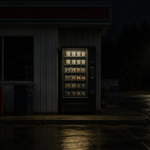
There’s a bait vending machine outside the gas station on State Highway 23, on the corner where you turn off to come into Flat Rock. It’s been there longer than anyone can remember, which in a town like ours means at least fifteen years, maybe more. No one’s entirely sure when it arrived or who put it there. That’s not the kind of question people ask here anymore. The machine itself is nothing fancy—painted forest green, the kind of color that was probably fashionable sometime in the ’80s. The front panel has a scratched acrylic window, yellowed slightly from weather and time. Inside, in neat rows, are the offerings: styrofoam cups of live nightcrawlers, containers of shiners, hand warmers in the winter months, a few cans of that smelly dip that supposedly keeps the mosquitoes away (it doesn’t). Everything you’d need for a dawn fishing trip to the lake, all available at two in the morning if the mood struck. And someone, somewhere, is keeping it stocked. That’s what gets people. Not the machine itself. Vending machines are common enough. It’s the fact that those worms are always fresh. The shiners don’t go bad. The plastic bags of jigs or leaders replensihed. Someone is out there, regularly, making sure that at three in the morning on a Tuesday in March, if you pull up to that machine with two dollars and an itch to fish, you’ll find exactly what you need. I asked Del Paulson about it once. Del runs the gas station, and has for about twenty years. He’s the kind of guy who notices things. I figured he would know. “Damned if I know,” he said, wiping his hands on a rag. “Comes with the lot, I guess. When I took over the place, it was already here. I don’t stock it. I don’t touch it. The money comes out—or it doesn’t, who knows—and the product stays fresh.” “You ever see who fills it?” I asked. “Nope. And I don’t ask questions.” That’s the Flat Rock way, I suppose. We’ve got enough mysteries in this town without interrogating every oddity. The machine works. The worms catch fish. That’s enough. Maybe it’s old Frank Kellerman, who’s been retired from the bait shop for a decade but can’t quite let the work go. Maybe it’s someone’s kid, doing it quietly, making a little money for a new bike on the side without anyone needing to know their name. Maybe it’s someone from out of town, restocking it once a month on their way through, some small act of commerce or kindness or strange hobby that only makes sense to them. I’ve fished that lake maybe four times in my life. I’m not a fisherman. But I’ve pulled up to that machine at odd hours, not to use it, just to look at it. There’s something oddly comforting about it. In a world where everything seems to require seventeen steps and a customer service number, there’s this machine. Simple. Reliable. Asking nothing but two dollars and trusting you to know what you need. The funny thing is, nobody in Flat Rock talks much about it. You mention the machine, and people nod. They know it. They might’ve used it once. But there’s no gossip or betting pools about who maintains it. No theories passed around the diner. It just is, the way the water tower is, the way Jefferson Street is. Maybe that’s the real mystery. Not who stocks the machine, but why we’ve all collectively decided not to make a fuss about it. In a town where everybody knows everybody else’s business, we’ve all agreed to leave this one thing alone. There’s something almost reverent about it, if you think about it long enough. And somewhere, someone is making sure it stays that way. I don’t know who they are, and I’m pretty sure I never will.
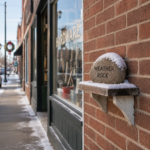
One of a Midwesterner’s favorite topics is the weather. If you’ve spent more than a few minutes in Minnesota, you’ve probably realized the weather can change on a dime. There’s an old saying, “If you don’t like the weather, wait fifteen minutes.” Whether the saying is true is open for debate, but it certainly gives people something to talk about while they’re waiting for the sun to come back out. One morning begins with frost on the windshield before giving way to an afternoon warm enough to push everyone into short sleeves. And don’t get too comfortable, because Mother Nature has no problem reminding you she’s still in charge. Around here, snow has a habit of showing up long after everyone thought winter had packed its bags. Of course, longtime residents insist Minnesota doesn’t really have four seasons. Bernard Gerardy, who traded Flat Rock for Phoenix several years ago, once explained it best. “Minnesota only has two seasons,” he laughed. “Winter and road construction. Summer’s about the best three weeks we’ve got.” It’s hard to argue with him. When someone asked how he handled the desert heat, Bernard just smiled. “It’s simple,” he replied. “You stay out of it. It’s like January back in the Cities. You brave the fifteen-below temperatures just long enough to get in and out of the car. Summer in Arizona is the same. We know better.” Bernard is right about the construction. As soon as the snow finally melts, orange barrels appear almost overnight. Detours become part of everyday life, and locals instinctively know to leave a few extra minutes for just about any trip. My nephew, who went to college in St. Cloud, used to pull up directions on his phone every Monday morning when he drove back to school. It wasn’t because he didn’t know the way—it was because his phone could tell him how long the drive would actually take based on road construction. Still, the unpredictable weather is part of what makes northern Minnesota special. The first warm day of spring sends people walking downtown with cups of coffee in hand. Summer evenings fill the shoreline of Lake La Pointe with anglers hoping for one more bite before sunset. Autumn paints the trees in brilliant shades of red and gold, while winter transforms the town into the kind of postcard visitors can’t resist photographing—assuming they visit during the winter, which most of them wisely don’t. And if all else fails, there’s one forecast the people of Flat Rock trust more than any television meteorologist. Just outside White’s Hardware sits the town’s famous Weather Rock, mounted atop a wooden platform extending from the side of the building. Its forecasting system has remained remarkably consistent for years: -If the rock is warm, it’s sunny. -If it’s wet, it’s raining. -If it’s white, it’s snowing. -If you can’t see the rock… it’s probably foggy. And if the rock is missing altogether, you may want to head for the storm shelter. It may not be the most sophisticated weather station in Minnesota, but around here, it has one advantage every forecaster envies. The Weather Rock has never once had to apologize for getting the forecast wrong.
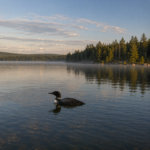
Sometime in May, they come back. You won’t see them at first, they’ll be out on the lake, too far away to make out clearly. But you’ll hear them. That call, the one that sounds like someone laughing in the dark, like joy and loneliness mixed together in a way only a loon can manage. It’s the sound that tells you winter is truly over. It’s the sound that says you’re home. People talk about the robins as a sign of spring. Here in Flat Rock, we know better. The robins are nice enough, but they’re just birds. The loons…the loons are something else. They’re a covenant. A promise that the world still turns the way it’s supposed to. Minnesota chose the loon as our state bird, and whoever made that decision understood something fundamental about us, as a people. It wasn’t because the loon is particularly beautiful, though it is. Black and white, sleek and elegant, the kind of bird that looks like it was designed to mean something. It was because of that call. Because you hear it and you know—you know—that you’re in a place where wild things still exist. Where water is enough, and sky is enough, and the sound of a bird laughing across a lake in the gathering dark is enough. Mason White says he can set his watch by when they return. Within a day or two of the same week every year, they’re back on Lake La Pointe. Mason has been running White’s Hardware long enough to know how these things work. He’s noticed patterns. He’s learned what’s reliable. “You’ll be out on the water,” he told me once, “and you’ll hear that sound, and it’s like the whole season shifts. Everything that was waiting starts moving again.” I asked him if he ever gets tired of Minnesota. The long winters, the unpredictable weather, the sameness of it all. “Why would I?” he said. “Where else can you hear that?” He had a point. There’s something about that call that gets into your bones. Young people leave Flat Rock all the time. They go to the Cities, or further, looking for opportunities, or adventure, or just because they need to know what else is out there. And plenty of them don’t come back. But the ones who do, the ones who stay, they all mention the same thing eventually. They miss that sound. I read once that loon chicks learn their parents’ call while they’re still in the egg. Before they’re even born, they’re learning the voice of home. Maybe that’s what we do too, growing up on these lakes. We learn the loon’s call before we even know we’re learning it, and it becomes wired into us. Becomes the sound of belonging. Despite what Longfellow or Gordon Lightfoot may say, the Ojibwe people called this place Gitchi-Gami. The great water. They understood what the loons understand. That some places are sacred not because of what we build there, but because of what already exists there. What was there before us, and what will be there after. In May, when you hear that laugh echoing across the water at dusk, you’re hearing something that’s been echoing across these lakes for longer than Flat Rock has existed. Longer than Minnesota has been a state. It’s a sound that connects us backward. To the people who listened to it before us. To the seasons that turned before we were here to see them. And it promises that if we’re lucky, it’ll still be echoing long after we’re gone. That’s why we listen for it. That’s why we mark its return. That’s why, when spring finally comes and you hear that wild, laughing call across the water, you stop whatever you’re doing and just listen. Listen to the Loons… https://kevinzelenka.com/wp-content/uploads/2026/07/Listen-to-the-Loons.mp3
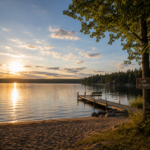
If you’ve spent any time in Minnesota, you’ve noticed something about how we name our lakes. We’re not particularly creative about it. Someone looked at the water and said, “Well, that’s a big lake,” and Big Lake got its name. A few counties over, a similar conversation was had. One person threw out a suggestion. “How about Big Lake?” “It’s already taken.” “OK, um… Long Lake?” “Yep, it is kinda long. Let’s put it to a vote.” With over 10,000 lakes in Minnesota, this process became more and more difficult. Finding different geographical references grew challenging. Other characteristics had to came into play. Trees, fish, and just the general look and feel of the body of water were used, giving us destinations like Maple, Bass, and Pleasant Lakes. Leech Lake? Let’s just say that it earned its name the hard way. We see something, we describe it, we move on. There’s a practical honesty to Minnesota lake naming that’s almost admirable in its laziness. There are hundred of lakes that are just given numbers. Lake La Pointe is different. Our lake—the one that sits right here at Flat Rock’s edge, that brings the tourists in summer, that fills the docks and the restaurants and the shops with life—has a name that comes from somewhere else entirely. A name that carries history in it. The kind of history that isn’t always easy to talk about, especially in a town that prefers things smooth and uncomplicated. La Pointe is the name of a place in Wisconsin where a treaty was signed in 1854. The Treaty of La Pointe. An agreement between the Ojibwe people and the United States government about land. Who owned it, what would happen to it, what rights people would have. The kind of agreement that usually meant one side got what it wanted and the other side got what was left over. For a long time, nobody in Flat Rock thought much about what that meant. The lake was just the lake. It had a name, and the name was on the map, and that was that. You grew up saying it, and didn’t think past the words to what was underneath them. But lately—and I don’t know exactly when this started—some people have begun thinking about it differently. A woman at the Bear Claw Bakery mentioned it to a friend. Someone brought it up at the library book club. A teenager asked her parents why the lake was called that, and they didn’t have a good answer, so they looked it up. And once you know something, you can’t un-know it. It’s very Minnesota, the way this is happening. Not loudly at town council meetings demanding change. Just quietly, in conversations, in a growing awareness that the name we’ve always used carries something we’re only just now paying attention to. The kind of thinking that spreads through a small town like water finding its level. The sign still says Lake La Pointe, as does the map. But there’s a hesitation now, sometimes, just for a moment, before people say the name. Like they’re holding something in their minds while the word is coming out. Who knows what comes next? Maybe nothing. Maybe Flat Rock will keep the name exactly as it is, and this quiet knowing will just become part of how we live here. Aware, carrying the history while we’re also carrying fishing poles and summer memories. Or maybe someday, someone will look at this beautiful lake on the edge of Flat Rock and say, “You know what? The lake is clear. There are pine trees on the north end. Look at all of those flat rocks on the Eastern shoreline.” And we’ll end up with one of those honest, practical Minnesota names after all. The kind that just describes what you see, without all the history tangled up in the syllables. Either way, it will still be here. Still beautiful. Still the heart of what makes Flat Rock what it is.

There’s a particular kind of patience that comes with living in a small town. Not the restless kind of patience of someone waiting for something to happen, but rather the quiet acceptance that things will happen when they’re meant to, and rushing won’t change the timeline. You see this most clearly on Jefferson Street on a Friday afternoon. Herb Grissholm lost his driver’s license last summer. The official story involves the Twins playing a doubleheader, the Prohibition Bar and Grille having cold beer and a comfortable barstool, and the local police having a low tolerance for that particular combination. Herb, being a practical man, decided that if he couldn’t drive a car anymore, he’d simply find an alternative. So now, on any given day, you might find Herb cruising down Jefferson Street on his green John Deere lawnmower, moving at approximately three miles per hour, waving at everyone he passes like he’s in a parade that nobody else knows is happening. Law enforcement has opinions about this. The city council has opinions. But Herb? Herb just keeps mowing. The thing about a lawnmower on one of the busiest streets in Flat Rock is that it stops traffic. Not with urgency or chaos, but with a kind of enforced slowness. You can’t honk at a lawnmower. Well, you can, but as Nancy Bauer, from Klein’s Pharmacy discovered, It won’t make Herb go any faster. Instead, it may warrent an obscene finger gesture instead. So you just… sit there. For however long it takes for Herb to make his way from one end of town to the other, moving at a pace that was designed for cutting grass, not transporting people. And something interesting happens when you’re forced to slow down. You notice things. The way light hits the front of the Flat Rock Gazette office. The tiny ripples in the old pane, and that the glass must be original to the building, because new windows are too perfect. The flowers that someone planted outside of Shear Ellegance, the beauty salon, different from what was there in the spring. The person crossing the street who you haven’t seen in months, and suddenly you have time to actually wave back instead of just nodding as you drive past. You might even pull over and have a conversation. What else were you doing that was so important? In a big city, this would be infuriating. People have places to be. Schedules to keep. Meetings that can’t wait. But Flat Rock operates on a different timeline. It’s a town that understands that sometimes the destination matters less than what you see on the way there. There’s a rhythm to how we drive here. Nobody’s tailgating. Nobody’s cutting people off to shave thirty seconds off their commute. The people of Flat Rock take turns at intersections the way they handle most conflicts. With a quiet nod and an understanding that we’re all just trying to get where we’re going. If you need to turn left and I need to turn right, one of us will wait. There’s no drama in it. Someone once said that you could tell a lot about a person by how they drove. Not whether they were reckless or careful, but whether they understood that driving wasn’t a race. It was a conversation with the road and the people on it. The person in front of you slowing down isn’t trying to ruin your day. They’re just moving at the speed that makes sense for them. Herb Grissholm on a lawnmower is just the logical extreme of that philosophy. I asked Del Paulson at the gas station what he thought about the whole situation. He just shrugged. “Herb’s not hurting anyone,” Del said. “He’s getting where he needs to go. Takes him a little longer, but then, what’s the rush? We’re not going anywhere.” That’s the Flat Rock way. We’re not going anywhere. The lake will still be there tomorrow. The coffee will still be hot. If you’re late to an appointment, people understand. They’ll wait. There’s something to be said for a town that moves at lawnmower speed sometimes. For people who understand that life isn’t about arriving first, but arriving together. It could be why most people in Flat Rock don’t mind getting stuck behind Herb. Sometimes the best speed is no speed at all. It forces you to notice things you’d otherwise miss. Maybe that’s what Herb has understood all along. So the next time you’re stuck behind that green John Deere, take a breath. Notice something. Wave at someone. Have a conversation. There’s no rush. That’s the real speed of Flat Rock. Not three miles an hour, but slow enough to remember why you came here in the first place.

There was another albino deer sighting yesterday, out by the golf course. Kerry Langer walked into Family Foods to grab a sandwich at the Deli and couldn’t stop talking about it. He’d seen it, he said. White as snow, moving through the trees at the edge of the course. Beautiful. Unmistakable. I wouldn’t call Kerry the most credible witness. He spends a few evenings a week at the Prohibition Bar and Grille, and his stories tend to get more elaborate the later the night gets. But there he was, eyes bright with the certainty of someone who’d witnessed something extraordinary, and suddenly half the people in the deli were nodding along as if they believed him. There are others who have claimed to have seen the ivory stag. Old Jim Thorson spotted it near Lake La Pointe fifteen years ago while walking his dog, standing as tall as a caribou. Sarah Carlson’s cousin, who visited Flat Rock last winter, maintained she’d seen it on her way back from ice skating on the pond behind the high school. She left town that afternoon and hasn’t been back since, so her claim was never verified. A few others have mentioned it, though it’s unclear whether they actually saw our unofficial mascot or just made up stories so they wouldn’t feel left out. No one has photos. No solid proof. But all of them have the same look in their eyes when they talk about it. That mix of wonder and frustration that comes from having experienced something nobody else can verify. Maybe the albino deer is like a unicorn or Santa Claus. You only see it if you believe in it, or if you’re pure of heart. Only the dreamers, the storytellers, the ones who still look for magic in the world. The rest of us? We just keep driving past the twelve deer crossing signs within the city limits, wondering when the deer are actually going to show up. When I told Trevor Hanson, Flat Rock’s unofficial historian, about Kerry’s sighting, he explained that the Ojibwe saw white deer as messengers from the spirit realm. Guides that brought protection to those who encountered them. The white deer appeared when you needed guidance most, when you were at risk of losing your way. The Ojibwe people understood that this land had spirits, not as fantasy, but as truth. And those spirits didn’t leave just because we drew new lines on a map and called it Flat Rock. In a world where everything is documented, verified, and shared online within seconds, there’s something almost sacred about a legend that refuses to be captured. And maybe that’s the point. Maybe Flat Rock needs its mysteries. It needs its albino deer and its unanswered questions. The possibility that something rare and beautiful is out there, just beyond the edges of what we can prove. I hope the sightings become more frequent. We could all use a nudge in the right direction. Real or otherwise.